Recent studies show that the average first-page result contains approximately 1,447 words, while pages that load in under 2.5 seconds rank significantly better, and websites with strong backlink profiles receive 77.8% more organic traffic than those without.
Understanding Google’s ranking factors in 20256and algorithm, which consists of numerous factors, is essential for optimising websites to attain a prominent position in search results.
While Google keeps the specifics of its algorithm closely guarded, experts in the field have deduced a list of around 200 key ranking factors that play a pivotal role in determining a website’s search engine ranking
It’s important to note that Google’s algorithm is constantly evolving and may incorporate other factors not listed here. Additionally, the exact weight and importance of each factor are not publicly disclosed and may vary based on the search query and user intent.
But then again not all of Google’s 200 ranking factors are necessarily equally important. The fact is you can have the best one and still have your website get passed over because Google thinks that your competitor’s sites are better optimised than yours.
This is a rather unfortunate outcome and one that happens quite frequently. You get passed over not because the Google algorithm ranks your site higher than another, but because Google thinks that your site has a better chance of being indexed.
Another important factor is the domain age of your site. Google takes into consideration the age of your pages when they are indexing your pages.
The greater amount of time that a page has been on the internet the more relevance it receives from Google. However, the algorithm is not perfect and if you happen to have older pages that are just beginning to show up on SERPs you could see your rank drop.

To make Google rank your page well in Google they look at several factors. These are your page rank, the number of times your keyword appears on your page, the density of your keywords in your content and also the total number of times your keyword appears in your page content.
🚀 SEO Ranking Factor Analyzer
Discover the importance of any SEO factor and learn how to implement it
📋 How to Implement:
List of 200 + Google Ranking Factors & Descriptions For 2025
- Keyword As First Word in Domain: Similar to the top-level domain, the keyword as the first word can enhance relevance.
- Domain Age: Older domains often hold more authority and trust. (Unconfirmed)
- Domain Registration Length: Longer domain registrations might indicate commitment and legitimacy.
- Keyword in Subdomain: Including keywords in subdomains can help signal content focus.
- Domain History: A clean history free from penalties is advantageous.
- Exact Match Domain: Exact keyword match in the domain can confer some ranking benefits.
- Public vs. Private WhoIs: Open WhoIs information might indicate transparency and credibility.
- Penalised Who Is Owner: If the domain was previously owned by someone penalized, it could have an impact.
- Country TLD Extension: Using a country-specific domain can be helpful for local targeting.
- Keywords in Title Tag: Including keywords in title tags helps signal page relevance.
- Title Tag Starts with Keyword: Starting the title tag with the keyword may have a slight impact.
- Keyword in Description Tag: The meta description with keywords can influence click-through rates.
- Keyword Appears in H1 Tag: The H1 tag is a strong signal for page topic.
- How Often a Word Appears in a Document: Keyword frequency indicates content relevance.
- Content Length: Longer content can offer more comprehensive coverage.
- Table of Contents: A table of contents can enhance user experience for longer content.
- Keyword Density: A balanced keyword density is crucial for avoiding over-optimisation.
- Latent Semantic Indexing Keywords in Content (LSI): LSI keywords show content depth and relevance
- LSI Keywords in Title and Description Tags: LSI keywords in these tags add context.
- Page Covers Topic In-Depth: Comprehensive coverage of the topic can rank higher.
- Page Loading Speed via HTML: Faster loading improves user experience.
- Page Loading Speed via Chrome: Google Chrome’s user experience data can influence ranking.
- Use of AMP: Accelerated Mobile Pages enhance mobile performance.
- Entity Match: Content that matches search intent and entity context ranks higher.
- Google Hummingbird: Algorithm update focused on understanding user intent.
- Duplicate Content: Duplicate content can result in ranking penalties.
- Rel=Canonical: Proper use of canonical tags helps with content duplication issues.
- Image Optimization: Properly optimised images improve user experience.
- Content Recency: Fresh content can rank higher for trending topics.
- Magnitude of Content Updates: Regular content updates signal relevance and authority.
- Historical Page Updates: Pages with consistent updates may signal freshness.
- Keyword Prominence: Keywords placed prominently have greater impact.
- Keyword in H2, H3 Tags: Headers indicate content structure and relevance.
- Outbound Link Quality: Linking to reputable sources improves user experience.
- Outbound Link Theme: Relevant outbound links enhance content value.
- Grammar and Spelling: High-quality content includes proper grammar and spelling.
- Syndicated Content: Duplicate content from syndication can affect rankings.
- Mobile-Friendly Update: Mobile-friendly pages receive a ranking boost on mobile searches.
- Mobile Usability: User-friendly mobile design enhances ranking.
- Hidden” Content on Mobile: Hiding content on mobile can lead to ranking issues.
- Helpful “Supplementary Content: Supporting content enriches user experience.
- Content Hidden Behind Tabs: Content in tabs might be given less weight.
- Number of Outbound Links: Excessive outbound links can affect user experience.
- Multimedia: Diverse content types improve user engagement.
- Number of Internal Links Pointing to Page: Internal linking signals page importance.
- Quality of Internal Links Pointing to Page: High-quality internal links boost page value.
- Broken Links: Broken links negatively affect user experience and ranking.
- Reading Level: Matching content reading level to target audience matters.
- Affiliate Links: Too many affiliate links can be seen as spammy.
- HTML Errors/W3C Validation: Clean code improves site performance.
- Domain Authority: Domain authority indicates site credibility.
- Page’s PageRank: PageRank still plays a minor role in ranking.
- URL Length: Short URLs are user-friendly and easier to share.
- URL Path: URL structure should be logical and descriptive.
- Human Editors: Content reviewed by experts might rank better.
- Page Category: Clear categorisation aids search engines in understanding content.
- Keyword in URL: Including keywords in URLs reinforces relevance.
- URL String: Descriptive URLs improve user experience.
- References and Sources: Citing sources enhances content credibility.
- Bullets and Numbered Lists: These improve content readability.
- Priority of Page in Sitemap: Pages with higher priority in sitemap may get more visibility.
- Too Many Outbound Links: Excessive outbound links can dilute value.
- UX Signals From Other Keywords Page Ranks For: Signals from other keywords indicate page relevance.
- Page Age: Older pages can accumulate authority.
- User-Friendly Layout: A clear, easy-to-navigate layout improves user experience.
- Parked Domains: Domain parking negatively affects ranking.
- Useful Content: Content that provides value ranks better.
- Content Provides Value and Unique Insights: Unique content is favored by Google.
- Contact Us Page: Including contact information enhances credibility.
- Domain Trust/TrustRank: Trustworthy domains receive ranking benefits.
- Site Architecture: Well-structured site architecture aids navigation.
- Site Updates: Regular updates signal site activity and relevance.
- Presence of Sitemap: Sitemaps help search engines index content efficiently.
- Site Uptime: Frequent downtime negatively impacts ranking.
- Server Location: Server location can influence local search rankings.
- SSL Certificate: Secure sites receive ranking advantages.
- Terms of Service and Privacy Pages: Transparency through these pages is valued.
- Duplicate Meta Information On-Site: Unique meta tags are crucial for differentiating pages.
- Breadcrumb Navigation: Breadcrumb navigation enhances user experience.
- Mobile Optimized: Mobile-friendly sites rank higher on mobile searches.
- YouTube Channels: YouTube content integration can boost ranking.
- Site Usability: User-friendly sites improve user experience.
- Use of Google Analytics and Google Search Console: Integration with these tools aids performance tracking.
- User Reviews/Site Reputation: Positive reviews enhance site credibility.
- Linking Domain Age: Older linking domains are more valuable.
- Number of Linking Root Domains: Diverse linking domains indicate authority.
- Number of Links from Separate C-Class IPs: Diversity in IP addresses is valuable.
- Number of Linking Pages: More linking pages signify authority.
- Backlink Anchor Text: Anchor text relevance impacts rankings.
- Number of Linking Pages: The quantity of unique pages linking to your website impacts authority.
- Backlink Anchor Text: The text used in backlinks affects keyword relevance.
- Alt Tag (for Image Links): Descriptive text for image links is vital for accessibility and context.
- Links from .edu or .gov Domains: Backlinks from educational or government sites carry substantial authority.
- Authority of Linking Page: The authority of the page linking to yours influences ranking.
- Authority of Linking Domain: The overall authority of the domain linking to you matters.
- Links From Competitors: Links from competitor sites can provide valuable relevance.
- Links from “Expected” Websites: Relevant and expected sources of backlinks have positive effects.
- Links from Bad Neighborhoods: Links from low-quality or spammy sites can harm ranking.
- Guest Posts: High-quality guest posts on reputable sites contribute to authority.
- Links From Ads: Paid links might have a limited impact on ranking.
- Homepage Authority: The authority of your website’s homepage can influence internal pages.
- Nofollow Links: Nofollow links may not directly impact rankings but offer diversity.
- Diversity of Link Types: A mix of link types signals natural growth and relevance.
- “Sponsored” or “UGC” Tags: Properly tagging links as sponsored or user-generated content helps search engines understand.
- Contextual Links: Links placed within relevant content hold greater value.
- Excessive 301 Redirects to Page: Too many redirects can affect ranking potential.
- Internal Link Anchor Text: Anchor text in internal links influences page relevance.
- Link Title Attribution: Proper use of title attributes in links improves accessibility.
- Country TLD of Referring Domain: Links from country-specific domains boost local relevance.
- Link Location In Content: Links placed higher in content have greater relevance.
- Linking Domain Relevancy: Links from domains relevant to your niche have more impact.
- Page-Level Relevancy: The context of the linking page affects link value.
- Keyword in Title: Links with keywords in the title contribute to relevance.
- Positive Link Velocity: A consistent increase in quality backlinks is beneficial.
- Negative Link Velocity: Sudden decreases in backlinks may raise concerns.
- Links from “Hub” Pages: Backlinks from authoritative hub pages hold value.
- Link from Authority Sites: Links from highly authoritative sites enhance ranking.
- Linked to as Wikipedia Source: Wikipedia links provide substantial authority.
- Co-Occurrences: Keywords related to the target term impact ranking.
- Backlink Age: Older backlinks might have more value.
- Links from Real Sites vs. “Splogs: Links from legitimate sites are more valuable than spam blogs.
- Natural Link Profile: A diverse mix of natural-looking links is important.
- Reciprocal Links: Mutual backlinks might have less impact on ranking.
- User Generated Content Links: Links within user-generated content can be valuable.
- Links from 301: Redirected links maintain some ranking value.
- Schema.org Usage: Proper use of schema markup enhances visibility in search results.
- TrustRank of Linking Site: Links from high-trust sites carry more weight.
- Number of Outbound Links on Page: Excessive outbound links can dilute link value.
- Forum Links: Links from relevant and reputable forums can improve authority.
- Word Count of Linking Content: Longer linking content often signifies quality.
- Quality of Linking Content: High-quality content around the link improves its value.
- Sitewide Links: Links that appear across the entire site influence ranking.
- RankBrain: Google’s machine learning algorithm interprets user intent for ranking.
- Organic Click-Through Rate for a Keyword: High CTR indicates relevance.
- Organic CTR for All Keywords: Overall CTR influences site authority.
- Bounce Rate: A low bounce rate signals relevant content.
- Direct Traffic: Direct visits can indicate site popularity.
- Repeat Traffic: Repeat visitors show site value.
- Pogosticking: Rapid back-and-forth navigation might indicate poor content relevance.
- Blocked Sites: Websites that are blocked by users can indicate low-quality content.
- Chrome Bookmarks: The number of times a page is bookmarked in Google Chrome can signal quality.
- Number of Comments: User engagement through comments can indicate content value.
- Dwell Time: The amount of time users spend on a page affects its ranking.
- Query Deserves Freshness: Fresh content is favored for trending or time-sensitive queries.
- Query Deserves Diversity: Google aims to provide diverse results for ambiguous queries.
- User Browsing History: Personalized results based on a user’s browsing history can impact rankings.
- User Search History: Personalized results based on a user’s search history can influence rankings.
- Featured Snippets: Being featured in snippets can increase visibility and click-through rates.
- Geo Targeting: Serving content relevant to the user’s geographical location can improve ranking.
- Safe Search: Google’s safe search setting can impact visibility for certain content.
- “YMYL” Keywords: Your Money or Your Life keywords face higher scrutiny due to potential user impact.
- DMCA Complaints: A Digital Millennium Copyright Act complaint can lead to ranking issues.
- Domain Diversity: Having a diverse backlink profile from different domains is beneficial.
- Transactional Searches: Searches with commercial intent can impact ranking for e-commerce sites.
- Local Searches: Local search signals are vital for businesses targeting local audiences.
- Big Brand Preference: Established brands receive preference in search results.
- Shopping Results: Google displays shopping results for certain product-related queries.
- Image Results: Image-based search queries trigger visual search results.
- Easter Egg Results: Google may include playful surprises in search results for specific queries.
- Single Site Results for Brands: Google sometimes displays results solely from a single authoritative brand.
- Payday Loans Update: An algorithmic update targeting spammy link queries like payday loans.
- Brand Name Anchor Text: Brand name anchor text in backlinks contributes to brand authority.
- Branded Searches: Searches specifically for a brand influence its ranking.
- Brand + Keyword Searches: Searches combining brand name and keyword impact ranking.
- Site Has Facebook Page and Likes: Social signals, including Facebook activity, can influence ranking.
- Site has Twitter Profile with Followers: Social signals from Twitter can impact ranking.
- Official Linkedin Company Page: Presence on LinkedIn may contribute to site authority.
- Known Authorship: Recognized authors can add credibility to content.
- Legitimacy of Social Media Account: Authentic social media accounts contribute to site credibility.
- Brand Mentions on Top Stories: Being mentioned in top news stories can influence ranking.
- Unlinked Brand Mentions: Brand mentions, even without links, may have an impact.
- Brick and Mortar Location: Local businesses’ physical locations impact local search rankings.
- Panda Penalty: The Panda algorithm targets low-quality or thin content.
- Links to Bad Neighborhoods: Links to spammy or low-quality sites can harm ranking.
- Sneaky Redirects: Illegitimate redirects can lead to ranking issues.
- Popups or “Distracting Ad: Intrusive ads can negatively affect user experience and ranking.
- Interstitial Popup: Full-screen interstitials can negatively impact mobile ranking.
- Site Over-Optimisation: Excessive optimization can lead to penalties.
- Gibberish Content: Content with low coherence can negatively affect ranking.
- Doorway Pages: Pages designed to manipulate search engines can lead to penalties.
- Ads Above the Fold: Excessive ads at the top of a page can harm user experience and ranking.
- Hiding Affiliate Links: Concealing affiliate links can impact user trust and ranking.
- Fred Updates: A series of updates targeting low-quality content and ad-heavy sites.
- Affiliate Sites: Google scrutinises thin affiliate sites with limited added value.
- Autogenerated Content: Low-quality auto-generated content may lead to penalties.
- Excess PageRank Sculpting: Overusing nofollow tags for PageRank sculpting can have an impact.
- IP Address Flagged as Spam: Sharing an IP address with spammy sites can harm ranking.
- Meta Tag Spamming: Overloading meta tags with keywords can lead to penalties.
- Hacked Sites: Compromised sites can be penalised or de-indexed.
- Unnatural Influx of Links: Sudden and unnatural link growth can raise concerns.
- Penguin Penalty: Penguin targets link spam and manipulative link practices.
- Link Profile with High % of Low Quality Links: A backlink profile dominated by low-quality links can impact ranking.
- Links From Unrelated Websites: Irrelevant backlinks can affect authority and relevance.
- Unnatural Links Warning: Google may send a warning for unnatural link practices.
- Low-Quality Directory Links: Links from low-quality directories can harm ranking.
- Widget Links: Links embedded in widgets might be devalued by Google.
- Links from the Same Class C IP: Linking from the same IP address might affect authority.
- Poison” Anchor Text: Negative or spammy anchor text can harm ranking.
- Unnatural Link Spike: Sudden and abnormal spikes in link acquisition can raise flags.
- Links From Articles and Press Releases: Excessive backlinks from articles and press releases can be problematic.
- Manual Actions: Google may manually penalise sites for violating guidelines.
- Selling Links: Selling backlinks for manipulation can lead to penalties.
- Google Sandbox: New websites might experience a period of lower ranking.
- Google Dance: Periodic fluctuations in rankings during Google’s updates.
- Disavow Tool: Disavowing bad backlinks can help mitigate penalties.
- Reconsideration Requests: Requests to Google for reconsideration after penalties.
- Temporary Link Schemes: Engaging in temporary link schemes can lead to penalties
Domain Factors
| Category | Ranking Factor | Explanation |
|---|---|---|
| Domain | Keyword as First Word in Domain | Improves perceived topic relevance. |
| Domain | Domain Age | Older domains may have more trust. |
| Domain | Domain Registration Length | Long registration may show legitimacy. |
| Domain | Keyword in Subdomain | Helps with topic signaling. |
| Domain | Domain History | Previous penalties matter. |
| Domain | Exact Match Domain | Can help slightly if not spammy. |
| Domain | Public vs Private WhoIs | Private ownership sometimes viewed cautiously. |
| Domain | Penalized Owner | Previous owner penalties can carry over. |
| Domain | Country TLD Extension | Helps with local SEO. |
Page-Level Factors
| Category | Ranking Factor | Explanation |
|---|---|---|
| On-Page | Keyword in Title Tag | Strong relevance signal. |
| On-Page | Title Starts With Keyword | Slight boost. |
| On-Page | Keyword in Description | Influences CTR. |
| On-Page | Keyword in H1 | Reinforces page topic. |
| On-Page | Keyword Frequency | Indicates relevance. |
| Content | Content Length | Longer content ranks better. |
| Content | Table of Contents | Enhances UX, helps for long posts. |
| Content | Keyword Density | Avoid over-optimization. |
| Content | LSI Keywords in Content | Helps semantic relevance. |
| Content | LSI Keywords in Title/Description | Adds context. |
| Content | In-Depth Topic Coverage | One of strongest ranking signals. |
| Speed | Page Speed (HTML) | Faster pages rank higher. |
| Speed | Page Speed (Chrome Data) | Real-world UX matters. |
| Mobile | Use of AMP | Faster mobile experience. |
| Content | Entity Match | Google understands entities & intent. |
| Content | Duplicate Content | Hurts ranking. |
| Technical | rel=canonical | Prevents duplicate indexing. |
| Images | Image Optimization | Alt tags, compression, etc. |
| Freshness | Content Recency | Fresh content ranks better. |
| Freshness | Magnitude of Updates | Bigger updates matter more. |
| Freshness | Historical Updates | Consistent updates help. |
| On-Page | Keyword Prominence | Earlier = stronger. |
| On-Page | Keyword in H2/H3 | Supports relevance. |
| On-Page | Outbound Link Quality | Trusted references help. |
| On-Page | Outbound Link Relevance | Thematically relevant links help. |
| Quality | Grammar & Spelling | Quality signal. |
| Content | Syndicated Content | Lower value. |
| Mobile | Mobile-Friendly Update | Huge ranking factor. |
| Mobile | Mobile Usability | Direct ranking component. |
| Mobile | Hidden Content on Mobile | May get less weight. |
| UX | Helpful Supplementary Content | Improves ranking. |
| UX | Content Hidden in Tabs | Often weighted lower. |
| Internal Links | Number of Outbound Links | Too many reduce value. |
| UX | Multimedia | Improves engagement. |
| Internal Links | Number of Internal Links | Helps crawling & importance. |
| Internal Links | Quality of Internal Links | Strong signal. |
| Technical | Broken Links | Hurt UX & ranking. |
| UX | Reading Level | Depends on audience. |
| Affiliate | Affiliate Link Ratio | Too many is spammy. |
| Technical | HTML/W3C Errors | Poor quality signal. |
| Authority | Page Authority | Strong ranking factor. |
| URL | URL Length | Shorter = better. |
| URL | URL Path Structure | Clear + hierarchical. |
| Quality | Human Editors (Google Patents) | Possible influence. |
| Category | Page Category | Helps Google understand section. |
| URL | Keyword in URL | Boosts relevance. |
| URL | URL String | Context improves ranking. |
| Quality | References & Sources | Shows topical authority. |
| UX | Bullet & Number Lists | Improves readability. |
| Sitemaps | Priority in Sitemap | Slight crawl advantage. |
| Links | Too Many Outbound Links | Looks spammy. |
| UX | Signals From Other Keywords Ranked | Google measures broad UX. |
| Age | Page Age | Older pages with updates perform well. |
| UX | Layout Usability | Good design helps ranking. |
| Domain | Parked Domains | Not ranked. |
| Content | Useful Content | Core ranking factor. |
| Content | Unique Insights | Google rewards originality. |
Site-Level Factors
| Category | Ranking Factor | Explanation |
|---|---|---|
| Sitewide | Contact Page | Trust signal. |
| Authority | Domain Trust/TrustRank | Higher trust = higher ranking. |
| Architecture | Site Architecture | Helps crawling + topical clusters. |
| Freshness | Site Updates | Activity helps long term. |
| Sitemaps | XML Sitemap | Improves crawling. |
| Technical | Site Uptime | Downtime hurts ranking. |
| Technical | Server Location | Affects local SEO. |
| Security | SSL Certificate | Big ranking factor. |
| Legal | Terms & Privacy Pages | Trust signal. |
| Meta | Duplicate Meta Tags | Confuses Google. |
| UX | Breadcrumbs | Better crawling. |
| Mobile | Mobile Optimization | Required for high ranking. |
| Integration | YouTube Channel | Strong brand trust signal. |
| UX | Overall Usability | Influences user metrics. |
| Tools | Google Analytics/ Search Console | Not direct, helps quality. |
| Reputation | User Reviews | Affects ranking in many niches. |
Backlink Factors
| Category | Ranking Factor | Explanation |
|---|---|---|
| Links | Linking Domain Age | Older domains pass more trust. |
| Links | Linking Root Domains Count | Strongest backlink signal. |
| Links | C-Class IP Diversity | Shows natural link sources. |
| Links | Number of Linking Pages | More links = stronger ranking. |
| Links | Anchor Text | Very strong signal (watch overuse). |
| Images | Alt Tag on Image Link | Acts like anchor text. |
| EDU/Gov | Links from EDU/GOV | Often higher authority. |
| Authority | Linking Page Authority | High impact factor. |
| Authority | Linking Domain Authority | Strong ranking weight. |
| Competitive | Links from Competitors | Very strong relevance. |
| Relevance | Expected Websites | Natural linking source. |
| Toxic | Bad Neighborhood Links | Very harmful. |
| Guest Post | Guest Posts | Good if high quality. |
| Ads | Links from Ads | Usually nofollowed. |
| Domain | Homepage Authority | Passes strong link equity. |
| Link Type | Nofollow Links | Adds diversity. |
| Links | Diversity of Link Types | Natural profile. |
| Links | Sponsored & UGC Tags | Helps clarify link type. |
| Context | Contextual Links | Best kind of backlink. |
| Redirects | 301 Redirects | Pass most link equity. |
| Internal | Internal Anchor Text | Helps relevance. |
| Metadata | Link Title Attribute | Minor factor. |
| Local | Country TLD Backlinks | Help local SEO. |
| Placement | Link Position | Higher = stronger. |
| Relevance | Domain Relevancy | Top-tier factor. |
| Relevance | Page Relevancy | Also crucial. |
| Titles | Keyword in Page Title | Helps link value. |
| Velocity | Positive Link Velocity | Natural growth = good. |
| Velocity | Negative Link Velocity | Decline = bad. |
| Authority | Hub Page Links | Strong boost. |
| Authority | Authority Site Links | One of best backlinks. |
| Authority | Wikipedia Links | High trust. |
| Semantics | Co-Occurrences | Related terms near links. |
| Age | Backlink Age | Older links stronger. |
| Quality | Real Sites vs Splogs | Real sites = authority. |
| Naturalness | Natural Profile | Required to avoid penalties. |
| Reciprocal | Reciprocal Links | Too many = risky. |
| UGC | User-Generated Links | Low to medium value. |
| Redirects | Links from 301s | Pass value. |
| Schema | Schema Markup | Helps link understanding. |
| Trust | TrustRank from Link Source | Higher trust = more value. |
| Outbound | OBL on Linking Page | Too many outbound links dilute value. |
| Forums | Forum Links | Good when niche relevant. |
| Content | Word Count of Linking Content | Longer = more authoritative. |
| Content | Quality of Linking Content | Affects link power. |
| Sitewide | Sitewide Links | Lower value per link. |
User Interaction Signals (RankBrain)
| Category | Ranking Factor | Explanation |
|---|---|---|
| User | Organic CTR (per keyword) | Strong signal. |
| User | Overall CTR | Sitewide impact. |
| UX | Bounce Rate | Measures relevance. |
| UX | Direct Traffic | Brand strength. |
| UX | Repeat Traffic | Quality indicator. |
| UX | Pogosticking | Very negative signal. |
| User | Blocked Sites | Chrome data matters. |
| User | Bookmarks | Shows user trust. |
| Engagement | Number of Comments | Indicates content value. |
| Dwell Time | Time on Page | Major UX factor. |
Algorithm Rules / SERP Features
| Category | Ranking Factor | Explanation |
|---|---|---|
| Freshness | Query Deserves Freshness | Trending topics. |
| SERP | Query Deserves Diversity | Ambiguous queries. |
| Personalization | User Browsing History | Tailors results. |
| Personalization | User Search History | Personalizes ranking. |
| SERP | Featured Snippets | Important ranking surface. |
| Local | Geo Targeting | Location-based results. |
| Safety | Safe Search | Filters explicit content. |
| YMYL | YMYL Keyword Strictness | Higher scrutiny. |
| Legal | DMCA Complaints | Removes ranking. |
| Links | Domain Diversity | Varies linking sources. |
| Commerce | Transactional Searches | Different ranking mix. |
| Local | Local Searches | Google Maps + Signals. |
| Brands | Big Brand Boost | Strong brand trust. |
| SERP | Shopping Results | PLA ranking. |
| SERP | Image Results | Visual intent. |
| Fun | Easter Egg Results | Whimsical queries. |
| Brands | Single Site DOM for Brands | Site dominates branded queries. |
Brand Signals
| Category | Ranking Factor | Explanation |
|---|---|---|
| Brand | Brand Anchor Text | Strong brand signal. |
| Brand | Branded Searches | Google sees brand demand. |
| Brand | Brand + Keyword Searches | Strong association signal. |
| Social | Facebook Page + Likes | Trust factor. |
| Social | Twitter Account + Followers | Social proof. |
| Social | LinkedIn Company Page | Business legitimacy. |
| Author | Known Authors | EEAT signal. |
| Social | Social Media Authenticity | Real accounts matter. |
| News | Mentions in Top Stories | Strong authority. |
| Mentions | Unlinked Brand Mentions | Google uses them. |
| Local | Brick-and-mortar | Strong local authority. |
Penalties & Negative Factors
| Category | Ranking Factor | Explanation |
|---|---|---|
| Panda | Panda Penalties | Thin content. |
| Outbound | Linking to Bad Neighborhoods | Very harmful. |
| Redirects | Sneaky Redirects | Penalty. |
| Ads | Intrusive Ads/Popups | Hurts ranking. |
| Ads | Interstitial Ads | Harm mobile SEO. |
| Over-Optimization | Keyword Stuffing | Penalty risk. |
| Quality | Auto-Generated Content | Heavily penalized. |
| Quality | Gibberish Content | Spam signal. |
| Quality | Doorway Pages | Hard penalty. |
| UX | Ads Above the Fold | Negative signal. |
| Links | Hidden Affiliate Links | Spam indicator. |
| Updates | Google Fred Update | Targets ad-heavy, thin sites. |
| Affiliate | Thin Affiliate Sites | Penalized. |
| Sculpting | Excessive PR Sculpting | Ineffective. |
| IP | Spammy IP Range | Hurts trust. |
| Meta | Meta Tag Spamming | Penalized. |
| Security | Hacked Site | Massive ranking drop. |
| Links | Unnatural Link Spikes | Penguins trigger. |
| Penguin | Penguin Penalties | Link manipulation. |
| Links | High % of Low-Quality Links | Toxic profile. |
| Links | Irrelevant Links | Devalued. |
| Links | Unnatural Links Warning | Manual action risk. |
| Links | Low-Quality Directory Links | Spam signal. |
| Links | Widget Links | Artificial. |
| Links | Same C-Class Networks | Suspicious. |
| Links | Poison Anchor Text | Extremely harmful. |
| Links | Article/PR Links | Devalued heavily. |
| Manual | Manual Actions | Severe penalty. |
| Links | Selling Links | Big penalty. |
| Sandbox | Google Sandbox | Affects new sites. |
| Volatility | Google Dance | Ranking fluctuations. |
| Tools | Disavow Incorrect Use | Can hurt rankings. |
| Penalties | Temporary Link Schemes | Short-term, risky. |
Scientifically Proven Top 10 Google Ranking Factors 2025
- Content – Content is the king of all ranking factors
- Keyword Targeting
- Exact Match Domain Names
- Number of Relevant High Authority Backlinks
- Backlink Velocity
- Site Architecture
- Site Speed
- Keyword Appears in H1 Tag
- Keyword Density
- Geo Targeting
These Google ranking factors are extremely valuable in terms of SEO marketing strategies because these can help a website to rank much better than an individual webmaster might think.
If you can create a webpage that is relevant to what your target audience is looking for, you are a very good start to gaining natural rankings.
On top of that, you can also benefit greatly from the Google ranking factors if you can incorporate backlinks into your SEO strategy.
This means that you can get links from other websites and increase your own rankings as well. Backlinks can be a valuable tool for Search Engine Optimisation. This is because they increase the amount of time that it takes for your website to be ranked highly.
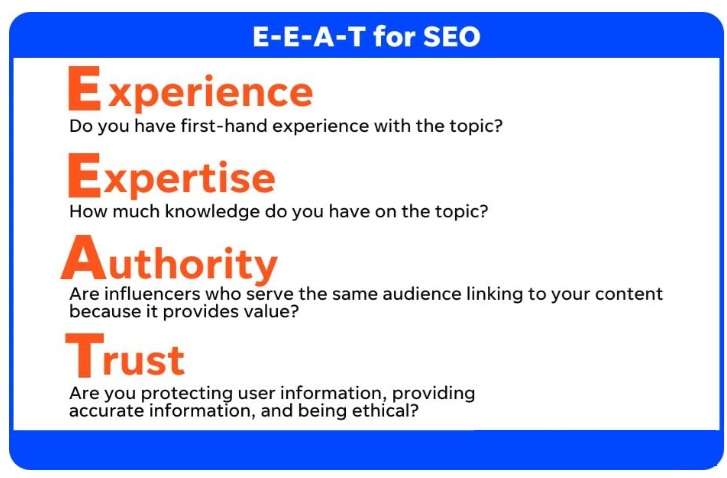
Google is looking for experience, expertise, authority, and trust (E-E-A-T).
Google’s EEAT (Experience, Expertise, Authoritativeness, and Trustworthiness) is a key quality framework used to evaluate how reliable and credible content is. Sites that clearly show real-world experience, expert knowledge, and transparent trust signals tend to rank higher in search results.
Search Engine Optimisation (SEO)
What is search engine optimisation?
This is an important marketing technique that many small businesses employ to boost the visibility of their website in Google and other search engines. SEO is not a one-size-fits-all technique.
It is a very individualised form of marketing that takes into consideration the needs of each individual company. One person’s idea of SEO might be totally different to another’s.
Search engine optimisation is all about making it simple for Google, Yahoo, and Bing to locate your site. It makes use of various techniques which help search engines locate the content you publish on your site (web content). Keywords are one of the most important factors that Google and Yahoo use to locate websites.
It is no secret that Google loves links. Therefore, if you want good search engine optimisation you have to have links. The more links you have leading from other web pages to your site the better chance you have of ranking well in Google and Yahoo.
This is why content is such a major part of SEO. You must provide relevant and useful content to people looking for information on the Internet. You must provide useful information in a format that is easy to navigate and is likely to draw them to your site.
Webmasters and Internet marketers alike are always looking for ways of increasing their websites’ popularity and their rankings in search engines.
This is a very time consuming process and many do not give up until they get high rankings. If you are one of those people then there are a few things that you should know first. These include how to increase your Google ranking and Yahoo rankings.
In order to make your Google ranking factor grow, it is vital that you do some keyword research. It is through this research that you will discover what types of keywords are being used by searchers to find certain products or services.
It is through this keyword research that you will learn what people are searching for so that you can target these keywords when developing your web pages. Your Google ranking factor will be determined by how many times your keywords appear on your page.
Another important part of effective seo is off-page SEO. This means optimising your web pages so that they receive organic search engine traffic.
Organic search engine traffic is the traffic that arrives through natural search engine results such as links from other webmasters or search results from listed keywords. The higher your ranking is, the more likely people are to click on your links and reach your site.
The Data Behind the Rankings: What Actually Moves the Needle in Google Search
As Google processes over 8.5 billion searches daily and commands 91.37% of the global desktop search market, understanding what drives visibility in its results has never been more critical for businesses.
Yet despite widespread speculation about the search giant’s mysterious algorithm, recent data analysis reveals clear patterns about which factors truly influence rankings.
Recent research analysing 16,298 English keywords across 300,000 positions found text relevance holds the highest correlation coefficient at 0.47 for ranking positions, significantly ahead of other factors. However, the story doesn’t end with content quality alone.
The highest-ranked page on Google receives 3.8 times more backlinks than pages ranked between positions two and ten, according to comprehensive SEO studies.
Even more striking, 94% of web pages across the internet have no external links pointing to them, revealing the competitive advantage quality backlinks provide.
The scarcity is even more pronounced than many realise. A staggering 95% of all pages online have zero backlinks pointing to their website, underscoring why acquiring quality links remains fundamental to search visibility.
Yet quantity alone doesn’t guarantee success. Research shows 93.8% of link builders prioritize link quality over quantity, acquiring links from reputable and relevant websites.
The data supports this approach: websites ranking on Google’s first page maintain an average of 2,200 linking root domains, while those ranking in positions one through three have over twice as many backlinks as pages ranking fourth through tenth.
The Speed Factor: Every Second Counts
Page load time has emerged as a critical ranking signal with measurable business impact. Analysis of 143,827 URLs revealed that time to first byte (TTFB) shows the largest correlation with search rankings, with top-ranked websites demonstrating significantly faster speeds.
The real-world effects extend beyond rankings. Google’s research shows bounce rates can rise by 32% when page load times increase from one second to three seconds.
The situation deteriorates rapidly: when pages take five seconds to load, bounce rates soar to 90%, and at ten seconds, bounce rates reach 123%.
Vodafone’s A/B testing revealed that a 31% improvement in Largest Contentful Paint boosted their lead-to-visit rate by 15%, cart-to-visit rate by 11%, and sales by 8%.
For ecommerce specifically, sites that load in one second achieve average conversion rates of 3.05%, compared to just 0.67% at four seconds.
The Content-Length Advantage
While content quality reigns supreme, length correlates with link acquisition and ranking success. Long-form content exceeding 3,000 words receives an average of 77.2% more backlinks than shorter articles, demonstrating that comprehensive content attracts more references from other sites.
Only 2.2% of published content generates backlinks from multiple unique websites, indicating that most online content fails to earn organic citations. This suggests substantial opportunity for businesses producing genuinely valuable, comprehensive resources.
The Future of Link Building
Survey data shows 65.2% of SEO professionals believe links will have the same or higher impact on rankings in the next five years, while 80% predict links will still be a ranking factor in ten years.
The industry recognises the challenge: 65% of digital marketers identify link building as the most difficult aspect of SEO, and 79.7% of SEO experts consider link building an essential part of their optimization strategy.
The investment reflects these priorities. Almost half of those in the SEO industry spend between $5,000 and $10,000 monthly on link building initiatives, underscoring its perceived importance despite the significant resource commitment required.
Is Search Engine Traffic A Ranking Factor?
While traffic is an important metric for measuring the success of a website, it is not one of the factors that Google uses to determine the ranking of a page in its search results. Google’s algorithm is designed to prioritise pages that offer the most relevant and useful information to users, regardless of how much traffic they receive.
That being said, there is a correlation between traffic and search engine rankings. Pages that rank higher in Google’s search results are more likely to receive more traffic, as they are more visible to users.
In this sense, traffic can indirectly impact a page’s search engine ranking, as Google may use user engagement metrics such as click-through rates (CTRs) to determine the relevance and usefulness of a page to users.
However, it’s important to note that CTRs and other user engagement metrics are just one of many factors that Google considers when ranking pages. Other factors such as content quality, backlinks, and user experience are also important in determining a page’s search engine ranking.
The Great SEO Shift: How AI Overviews Are Rewriting Google’s Rules
Traditional ranking factors lose ground as Google’s AI summaries trigger 61% drop in organic clicks
Google’s search landscape underwent a seismic transformation in 2025, with AI-generated summaries fundamentally altering how websites compete for visibility—and the data reveals a stark new reality for marketers.
The Numbers Tell a Sobering Story
Organic click-through rates for queries featuring Google AI Overviews plummeted 61% between June 2024 and September 2025, dropping from 1.76% to just 0.61%, according to research from Seer Interactive analysing over 25 million impressions. Even more concerning: paid click-through rates crashed 68%, falling from 19.7% to 6.34%.
The percentage of search results containing AI Overviews more than doubled in just three months, surging from 6.49% in January 2025 to 13.14% in March 2025. By September, AI Overviews appeared for 30% of U.S. desktop searches—and the expansion continues.
The Shifting Ranking Hierarchy
While AI disrupts traffic patterns, Google’s core ranking factors are evolving in parallel. Content quality now represents the single most important ranking factor, while backlinks—which once comprised more than 50% of the algorithm—have stabilized at just 13% as of Q1 2025.
The new hierarchy reflects Google’s AI-enhanced ability to evaluate content directly:
- Content quality remains paramount
- Niche expertise holds at 13%, emphasizing topic clustering
- Backlinks maintain relevance at 13% but continue declining
- Searcher engagement increased from 11% to 12%, now a core factor
Searcher engagement has increased each of the last three years, with SEO experts now using the phrase “average is the new bad” in an age where generative AI makes decent content universally accessible.
The Zero-Click Revolution
The traffic erosion extends beyond AI Overviews. 60% of Google searches now end without any click to a website, up from 58% in 2024, creating what analysts call “The Great Decoupling”—rising search volume with declining website visits.
Major publishers felt the impact dramatically:
- HubSpot’s monthly organic visits plummeted from approximately 13.5 million in November 2024 to less than 7 million by December 2024
- Mail Online reported a 56% decrease in CTR when AI Overviews appeared for their top-ranking keywords
- Learning platform Chegg reported a 49% decline in non-subscriber traffic between January 2024 and January 2025
The Citation Economy
Success metrics are shifting from traffic to visibility. 97% of AI Overviews cite at least one source from the top 20 organic results, making traditional SEO rankings still matter—but in a different way.
The advantage of being cited is measurable: brands cited in AI Overviews earned 35% more organic clicks and 91% more paid clicks than those not cited.
What’s Still Safe?
Not all queries face equal disruption. Approximately 84% of AI Overviews appear for informational queries, while transactional keywords have gradually risen to 12.54% as of September 2025. Commercial queries with higher cost-per-click remain largely untouched—for now.
The top three organic search results on Google still receive 68.7% of all clicks, demonstrating that prime positioning retains value even in the AI era.
The New Normal
Even queries without AI Overviews experienced a 41% decline in click-through rates year-over-year, suggesting users are changing how and where they seek information—turning to ChatGPT, Perplexity, and social platforms before Google.
The message from the data is clear: the golden age of search traffic has ended. What replaces it is an economy where visibility, authority, and AI citations matter as much as clicks—forcing marketers to fundamentally rethink their definition of SEO success.
Major Google Ranking Factors To Consider in 2026
Based on industry research and insights from experts, here is a generalised algorithm that Google may use to rank websites:
- Crawling and indexing: Google’s web crawlers, also known as “spiders” or “bots,” constantly scan the web for new and updated content. They index these pages and store them in a massive database, which is used for future searches.
- Content relevance: When someone enters a query, Google’s algorithm searches for pages in its database that contain keywords related to the search. It then ranks these pages based on how relevant they are to the query.
- Content quality: Google also considers the quality of the content on the page. Pages that are well-written, informative, and offer value to users are likely to rank higher. Factors that could influence quality include the presence of multimedia, such as images or videos, and the length and readability of the content.
- User experience: Google also considers how easy it is for users to navigate and interact with a website. Factors that could influence user experience include page loading speed, mobile-friendliness, and the presence of intrusive ads or pop-ups.
- Backlinks: Google considers the number and quality of backlinks to a page when ranking it. Backlinks are links from other websites that point to your page. Pages with more high-quality backlinks are likely to rank higher. However, Google also penalises pages with low-quality or spammy backlinks.
What Is The Google Search Google Algorithm?
Google’s search algorithm is a complex and constantly evolving set of rules and processes that Google uses to determine the relevance and usefulness of web pages in response to search queries.
The algorithm is responsible for ranking web pages in Google’s search results based on their relevance to the query, with the goal of providing the best possible results to users.
Google’s search algorithm uses a combination of on-page and off-page factors to determine the relevance and usefulness of a web page.
- On-page factors include things like the content of the page, the use of keywords, and the page structure and formatting.
- Off-page factors include things like the number and quality of backlinks to the page, as well as user engagement metrics like click-through rates and bounce rates.
The exact details of Google’s search algorithm are not publicly disclosed, as Google uses proprietary technology and processes to rank web pages.
Google’s search algorithm is constantly evolving and being updated as Google strives to improve the relevance and usefulness of its search results. Google’s updates are often designed to target specific issues, such as spam or low-quality content, and may result in changes to the ranking of some pages.
It’s important for website owners to stay up to date on changes to Google’s search algorithm and adjust their SEO strategies accordingly.
8 Major Google Algorithm Updates

What Are Google Search Engine Crawlers?
Google search engine crawlers, also known as Googlebot, are software programs that are used by Google to scan and analyse web pages on the internet.
The primary function of these crawlers is to gather information about web pages, including their content, structure, and links, in order to index them in Google’s search engine.
Google crawlers work by following links on web pages, which allows them to discover new pages to crawl and index. As they crawl web pages, the crawlers analyse various elements of the page, including its text content, images, and metadata, in order to determine its relevance and quality. This information is then used by Google’s search algorithm to rank web pages in its search results.
In addition to indexing web pages, Google crawlers also play an important role in detecting and identifying spammy or low-quality content, as well as other technical issues that can impact a website’s visibility in search results.
Website owners can help Google’s crawlers by creating high-quality, well-structured web pages that are optimized for search engines. This includes using relevant keywords in page titles and content, creating a clear and intuitive page structure, and building high-quality backlinks from other reputable websites.
The Google Helpful Content Update
Google’s “Helpful Content” update is not a specific algorithm update or official term used by Google. However, it may refer to Google’s ongoing efforts to prioritize high-quality and helpful content in its search results.
Google’s search algorithm has always been focused on providing the most relevant and useful results to users. In recent years, Google has made several updates to its algorithm to better achieve this goal, including updates aimed at promoting high-quality content and demoting low-quality or spammy content.
One example of an update that could be considered part of Google’s efforts to prioritize helpful content is the “Medic” update, which was rolled out in August 2018.
The Medic update was focused on improving the quality of health-related content in Google’s search results, with a particular emphasis on expertise, authority, and trustworthiness.
Another example of an update that prioritises helpful content is the “BERT” update, which was rolled out in October 2019. BERT is a natural language processing algorithm that aims to better understand the context and meaning of search queries, in order to provide more relevant and helpful results to users.
Overall, Google’s ongoing efforts to prioritise helpful and high-quality content are aimed at improving the user experience and helping users find the information they are looking for more easily and efficiently.
This is a positive trend for website owners who prioritise quality blog content and user experience, as it rewards them with higher visibility in Google’s search results.
How Hard Is It To Really Rank A Website On The First Page?
In the cutthroat world of online marketing, there’s one thing that every business owner dreams of: ranking on the first page of Google.
It’s the holy grail of online visibility, the key to unlocking a flood of organic traffic, and the difference between success and failure in the digital age. But as it turns out, ranking on the first page of Google is easier said than done.
For years, SEO experts have been preaching the gospel of on-page optimisation, link building, and content marketing as the keys to ranking on Google. And while these tactics can certainly help, they’re no longer enough to guarantee a first-page ranking in today’s hyper-competitive online landscape.
According to a recent study by Ahrefs, only 5.7% of all pages on the web rank on the first page of Google for at least one keyword. That means that for every 100 pages on the internet, fewer than 6 will make it to the top of Google’s search results. And the competition is only getting more intense.
So, what does it take to rank on the first page of Google?
For starters, it takes a deep understanding of Google’s ever-evolving algorithm, which now incorporates hundreds of different ranking factors, from user experience to brand authority to semantic relevance.
It also takes a massive investment of time, resources, and expertise. Building high-quality content, earning authoritative backlinks, optimising for mobile devices, and creating a seamless user experience all require a significant amount of time, effort, and skill.
And even with all of these factors in place, there’s still no guarantee of success. Google’s algorithm is notoriously unpredictable, and even the most well-executed SEO strategy can be derailed by a single algorithm update or a new competitor entering the market.
So, while ranking on the first page of Google is still the ultimate goal for businesses of all sizes, it’s no longer a given. It requires a herculean effort, a deep understanding of SEO best practices, and a willingness to adapt and evolve in the face of constant change.
But for those who are willing to put in the work, the rewards can be enormous: increased traffic, higher conversion rates, and a sustainable competitive advantage in the digital marketplace.
Immediate Factors – No Particular Order
- Word Relevance In Domain Name
- Linking Domain Content Relevancy
- Quality & Type of Referring Domains (Not number of referring domains)
- Content Authority – Niche
- Domain Dilution & Acquistion Difficulty
- Page Authority & Second Tier Hyperlinks (Not Domain Authority. Eg. DA)
- Exact Match Anchors – Partial Anchors
- Inbound Reference Website Type – EG. Blog, News, Forums, Directories
Items That Are “Not Immediate” Ranking Factors
- DA – Moz Domain Authority Score (Third Party SEO Metrics)
- Traffic. Traffic has no bearing on the SERP impact of a hyperlink.
- DR – Domain Rating – Ahrefs 3rd Party SEO Metrics Score
- Outbound Links. – Linking to external authority websites won’t increase your own rankings.
- Domain Extensions or country type, location.
- Website Load Time. – Load time does not increase your rankings. (only user retention)
Extended Ranking Factors Summary – Conclusion
In 2025 Google uses a complex algorithm to rank web pages in its search results. While the exact details of this algorithm are not publicly disclosed, Google has indicated that it considers more than 200 different ranking factors when determining the relevance and quality of a web page.
These factors include on-page elements like keyword usage, content quality, and page structure, as well as off-page factors like the number and quality of backlinks to a page, user engagement metrics, and social signals.
Some factors, like the quality of content and user experience, are generally considered to be more important than others.
However, website owners should be aware of all of the different ranking factors in order to create the best possible web pages and improve their chances of ranking highly in Google’s search results.
As search algorithms continue evolving, the fundamental principle remains unchanged: Google rewards websites that provide genuine value to users through high-quality content, strong technical foundations, and credible industry recognition—as evidenced by quality backlinks from reputable sources.